
July 12, 2026 · Michael Rodriguez
What Is Dealership AI Orchestration, in Plain Terms a GM Can Use?
Dealership AI orchestration is a connective layer that sits on top of the systems you already run and carries one customer's conversation across them, so nothing gets dropped in the gaps between your CRM, DMS, website, and service tools. Here is what that means on a real floor, without the jargon.
Every vendor uses the word orchestration now. Almost none of them will tell you what it means in language you could repeat to your owner. I sell cars for a living, so let me give you the version that survives a walk across your own floor, no jargon, no slide-three magic.
The short answer
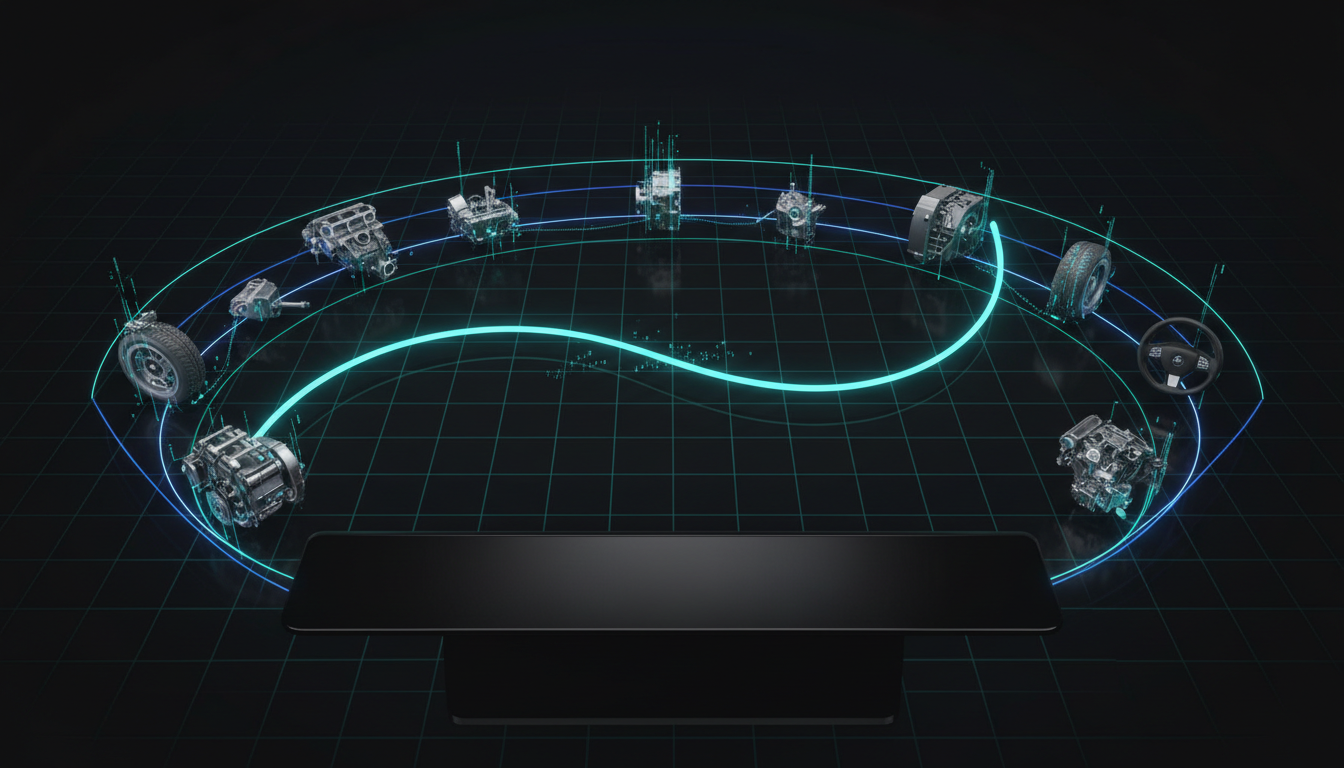
Dealership AI orchestration is a connective layer that sits on top of the systems you already run, your CRM, DMS, website, and service tools, and carries one customer's conversation across all of them so nothing gets dropped in the gaps between them. Today each tool owns a slice of the customer and none of them owns the whole conversation. Orchestration keeps that conversation whole and acts at each handoff. The simplest way to picture it: your systems are the instruments, and orchestration is the conductor that keeps them playing one song in time.
Definition
Dealership AI orchestration:
A connective layer that sits on top of a dealership's existing systems (CRM, DMS, website, service tools) and coordinates a single customer's journey across all of them, keeping one continuous thread and taking or triggering the right action at each handoff, rather than letting each system own an isolated slice of the customer. It is the conductor over your existing instruments, not a replacement instrument, and it does not require ripping out the tools you already own.
What does dealership AI orchestration actually mean?
Orchestration means one thing is watching the whole customer, across every system, and coordinating what happens next. Not one tool doing its own job well. One layer making all the tools work as a single performance.
Here is the picture that makes it click for GMs. Your dealership already owns a set of good instruments. Your CRM is a fine instrument for leads. Your DMS is a fine instrument for the back end. Your service tools are fine instruments for the drive. The problem was never the instruments. The problem is that nobody is conducting them, so they each play their own part on their own time and the customer hears noise instead of one song. Orchestration is the conductor. It does not play an instrument. It makes sure every instrument comes in at the right moment, in the right order, for the same customer. That is the entire idea, and everything else is a consequence of it.
Your systems are the instruments. Orchestration is the conductor. Most stores bought more instruments and wondered why the music got worse.
How is orchestration different from integration?
Integration is the wiring. Orchestration is the conductor that uses the wiring. They are not the same thing, and confusing them is how dealers buy the first and expect the second.
Integration means two systems can pass data back and forth. Your CRM can send a record to your DMS. Useful, necessary, and not the finish line. You can have every integration a vendor promises and still watch deals die, because passing data between two boxes is not the same as watching a whole customer move through five boxes and deciding what to do at each step. Integration answers "can these two tools talk?" Orchestration answers "is anyone making sure the whole conversation gets finished, across all of them, in real time?" This is the distinction I drew in the orchestration problem: the tools are not broken, and even the connections between them are not really the point. The missing piece is the layer that carries the thread and acts across the gaps.
The one-sentence test
Integration is "these two systems can talk." Orchestration is "something is watching the whole customer and making the right move at every handoff." If a vendor uses the second word to sell you the first thing, slow down.
Why does a dealership need orchestration at all?
Because the deal does not die inside a system. It dies in the gap between two of them, and no single tool is watching that gap. Orchestration exists to own the gaps.
Walk it through your own store and it stops being abstract. A customer's relationship with you is not one event, it is a conversation that moves: a website visit becomes a lead, becomes a sale, becomes a service customer, becomes a repeat buyer. Every one of those stages lives in a different system, and every handoff between systems is a place the thread can drop. The website knows a shopper spent twenty minutes on one truck; the CRM never hears about the intent. The DMS knows a customer is in a strong equity position; sales never sees it. The service lane sees that same customer every ninety days; nobody connects it to an upgrade conversation. The pieces are all there. Nobody assembled them into a move. That is what a store without orchestration looks like, and it is why where the conversation gets dropped between systems is a bigger leak than any single tool being weak.
And the reason it stays hidden is that the customer data itself is usually in conflict, so no one system can be trusted as the single view.
Read that second half again. When 70% of dealers say lags in real-time data make their insights less useful, they are describing life without orchestration in their own words. The information exists, it just arrives late and disagrees with itself, so acting on it is a guess. Orchestration's job is to reconcile one customer who lives as three disagreeing records in three tools, and then act while the data is still live.
What does orchestration actually do on the floor?
It catches the moments that fall between systems and makes the right move at the moment it matters, instead of logging it for someone to notice later. Same customer, one thread, real time.
Three examples every GM will recognize:
- The 8:40 PM lead. A buyer fills out a form after your BDC has gone home. Without orchestration, your CRM logs it and it sits until 9 the next morning, by which time two other stores have already called. With orchestration, the intent is carried straight into a fast, informed first response the moment the lead lands.
- The equity customer in the service lounge. Your service drive is the richest source of in-market buyers you own. The service system knows the vehicle, the mileage, the equity position. Sales never hears it because the two systems do not share a customer. Orchestration surfaces that customer to a salesperson while the car is still on the lift.
- The past buyer going back in-market. A customer you sold three years ago starts shopping again. The signal exists, buried outside your CRM. Orchestration connects that signal to a person who can act today, instead of you finding out when they show up on a competitor's lot. That is what knowing which past customer is back in-market is actually worth.
The reason speed is the whole game in that first example is not an opinion, it is well-documented industry data.
Source: MIT and InsideSales.com Lead Response Management Study
Orchestration is not a feature you show off in a demo. It is the thing that catches the 8:40 PM lead, the equity customer in the lounge, and the past buyer going back in-market, the three deals that were already yours and were quietly leaking out of the gaps between your systems.
Does orchestration mean replacing my CRM or DMS?
No, and this is where a lot of GMs get sold the wrong thing. Real orchestration sits on top of the tools you already pay for. If a vendor says you have to tear out your stack to get it, they are selling a platform migration wearing the word orchestration.
The instinct, once a GM feels this pain, is usually rip-and-replace: one platform to rule them all. I would push back hard on that. Rip-and-replace is slow, expensive, and disruptive, and it tends to trade your current set of gaps for a new, unfamiliar set inside one vendor's walls. The smarter move is to keep your DMS, CRM, and service tools as the systems of record they already are, and add a conducting layer above them that reads from each one and carries the conversation across the gaps. You keep the tools your people already know. You stop paying the silo tax. That is exactly why you do not have to replace your CRM or DMS to fix the integration problem, and it is how we approach the work: orchestrate what you own before you replace anything.

Here is the shape of it as a flow, which is all orchestration really is under the hood.
How do I tell if a vendor is actually selling orchestration?
Ask what it does across systems when nobody is looking. Real orchestration coordinates the whole customer across your stack on its own. A dashboard, a chatbot, or a single-system tool waits to be checked, or only ever sees its own slice.
The tells are simple. If the value depends on a human noticing a chart, it is a dashboard, not a conductor, which is the difference I broke down in a dashboard versus an intelligence layer. If it only sees the data inside one system, it cannot orchestrate across systems by definition, no matter what the slide says. And if getting it to work requires you to first migrate everything onto the vendor's platform, then what they are selling is the migration, and the orchestration is a promise for after you have already paid. The honest version of orchestration is unglamorous: it connects the tools you own, keeps one thread on the customer, and acts at the handoffs. That is harder to build and less pretty to demo than a screen full of charts, which is exactly why so few tools branded "orchestration" actually do it.
The move before you buy
Before you sign anything, map where your store actually drops the thread, the specific handoffs that fail and what each one costs you. Orientation first, tools second. You cannot orchestrate a gap you have not named.
The point: buy a conductor, not another instrument
Dealership AI orchestration is not a new instrument for your pit. It is the conductor that makes the instruments you already own play one song for one customer, so the deal does not die in the gap between the CRM and the service lane at 8:40 on a Tuesday. Most stores have spent years buying more instruments and wondering why the music got worse. The fix is not a tenth tool. It is the layer that finally coordinates the nine you have.
So before the next vendor says orchestration and shows you a screen, ask the plain-terms questions: does it watch the whole customer across every system, does it act at the handoffs on its own, and can it do that without me tearing out my stack? That is exactly what we map on a 30-minute diagnostic call: where your store drops the thread, and what it costs, before you spend a dollar fixing it. Worth a look?
Frequently asked questions
What is dealership AI orchestration in plain terms?
Dealership AI orchestration is a connective layer that sits on top of the systems you already run, your CRM, DMS, website, and service tools, and carries one customer's conversation across all of them so nothing gets dropped in the gaps. Instead of each tool owning a slice of the customer and none of them owning the whole conversation, orchestration keeps the thread whole and acts at each handoff. Think of it as a conductor, not another instrument. See the orchestration problem for the fuller picture.
How is orchestration different from just integrating my systems?
Integration means two systems can pass data to each other. Orchestration means something is watching the whole customer journey across every system and deciding what to do next at each step. Integration is the wiring; orchestration is the conductor that uses the wiring to keep one performance in time. You can have integrations that still drop deals, because passing data is not the same as finishing the conversation.
Do I need to replace my CRM or DMS to get orchestration?
No. The whole point of orchestration is that it sits on top of the tools you already pay for. It reads from your CRM, DMS, website, and service systems and coordinates across them without ripping anything out. If a vendor tells you orchestration requires tearing out your stack, they are selling a platform migration, not orchestration. Here is why you do not have to replace your CRM or DMS.
What does dealership AI orchestration actually do on the floor?
It catches the moments that fall between systems: the 8:40 PM lead your BDC is not there for, the equity customer sitting in your service lounge who sales never hears about, the past buyer who just went back in-market. Orchestration keeps one thread on that customer across every system and routes, responds, or surfaces the right move to the right person at the moment it matters, instead of logging it for someone to notice later.
Sources
- Cox Automotive, "Power of Data Study" (2024). mediaroom.kbb.com
- J. Oldroyd et al., MIT and InsideSales.com "Lead Response Management Study." onecavo.com
> FAQ
What is dealership AI orchestration in plain terms?
Dealership AI orchestration is a connective layer that sits on top of the systems you already run, your CRM, DMS, website, and service tools, and carries one customer's conversation across all of them so nothing gets dropped in the gaps. Instead of each tool owning a slice of the customer and none of them owning the whole conversation, orchestration keeps the thread whole and acts at each handoff. Think of it as a conductor, not another instrument.
How is orchestration different from just integrating my systems?
Integration means two systems can pass data to each other. Orchestration means something is watching the whole customer journey across every system and deciding what to do next at each step. Integration is the wiring; orchestration is the conductor that uses the wiring to keep one performance in time. You can have integrations that still drop deals, because passing data is not the same as finishing the conversation.
Do I need to replace my CRM or DMS to get orchestration?
No. The whole point of orchestration is that it sits on top of the tools you already pay for. It reads from your CRM, DMS, website, and service systems and coordinates across them without ripping anything out. If a vendor tells you orchestration requires tearing out your stack, they are selling you a platform migration, not orchestration.
What does dealership AI orchestration actually do on the floor?
It catches the moments that fall between systems: the 8:40 PM lead your BDC is not there for, the equity customer sitting in your service lounge who sales never hears about, the past buyer who just went back in-market. Orchestration keeps one thread on that customer across every system and routes, responds, or surfaces the right move to the right person at the moment it matters, instead of logging it for someone to notice later.
Michael Rodriguez
20 years in automotive retail, currently selling cars at the #1 volume Chevrolet dealer in the world. Michael builds and operates AI workflows on a real dealership floor, then translates what holds up for other operators. Used to diagnose systems, not sell software.
Want a clear-eyed read on where AI actually helps your store? Start with the twelve-question Reality Check, or talk to an operator.