
July 10, 2026 · Michael Rodriguez

Do I Have to Replace My CRM or DMS to Fix the Integration Problem?
The honest answer is almost always no. You rarely need to rip out your CRM or DMS to fix a dealership integration problem. The failure is in the handoffs between systems, not the systems themselves, so you orchestrate on top of what you own instead of replacing it.
Every few weeks a vendor tells a dealer that the reason their systems do not talk is the systems themselves, and the fix is to replace one of them, usually with the vendor's own platform. I sell cars for a living, so let me give you the operator answer to that pitch before you sign anything.
The short answer
No, you almost never have to replace your CRM or DMS to fix the integration problem. The problem is not that your systems are bad. It is that nothing carries the customer across the handoffs between them. Your CRM, DMS, and service tools each do their own job. What is missing is an orchestration layer that sits on top of the tools you already own and passes the conversation from one to the next. You fix the seams, not the systems, which means no rip-and-replace, no migration, and no retraining the floor.
Definition
Rip-and-replace:
Removing a working core dealership system, such as a CRM or DMS, and swapping in a new one to solve a problem. In an integration context it is usually the wrong tool, because the failure lives in the handoffs between systems, not inside any one of them, and a replacement system inherits the same seams the day it goes live.
Do I have to replace my CRM or DMS to fix integration?
No. In almost every store I have seen, the integration problem is a handoff problem, and a handoff problem does not get solved by replacing the boxes on either side of the handoff.
Think about what "integration problem" actually describes. It is not that your CRM cannot manage leads or your DMS cannot run the back end. Each of those tools usually does its own job. The problem shows up in the space between them, at the exact points where a customer conversation gets dropped between systems: the website intent that never reaches the CRM, the equity customer in the service lane that sales never sees, the after-hours lead that logs into a gap and waits for a morning that arrives too late. Ripping out the CRM does not close that gap, because the gap was never inside the CRM. It was in the pass. This is the orchestration problem: the failure is the connective tissue, not the organs.
You do not fix a broken handoff by replacing the systems on either side of it. You fix it by carrying the customer across the gap.
Why do vendors push you to rip and replace, then?
Because a replacement is what they sell, and "your systems don't talk" is the easiest way to sell it. It is not always cynical. It is just that a point-tool vendor can only reach for the tool it makes.
If a company sells a CRM, the fix for every problem tends to be a better CRM. If it sells an all-in-one platform, the fix is to move everything onto that platform. The diagnosis follows the product. But the store's real problem is rarely the quality of any single tool. Most dealers are not even running an overloaded stack. Independent scanning of dealer technology found the average U.S. dealership runs only a fraction of the tools available to it.
That number matters here. Most stores are not drowning in too many systems. They are running a handful of core tools that were never wired to hand off to each other. Adding a fifteenth system, or swapping one of the four you have, does nothing about the seams between the ones you keep. I wrote about the money side of this in the hidden integration tax. The rip-and-replace pitch is often just that tax wearing a nicer suit.
What does "orchestrate instead of replace" actually mean?
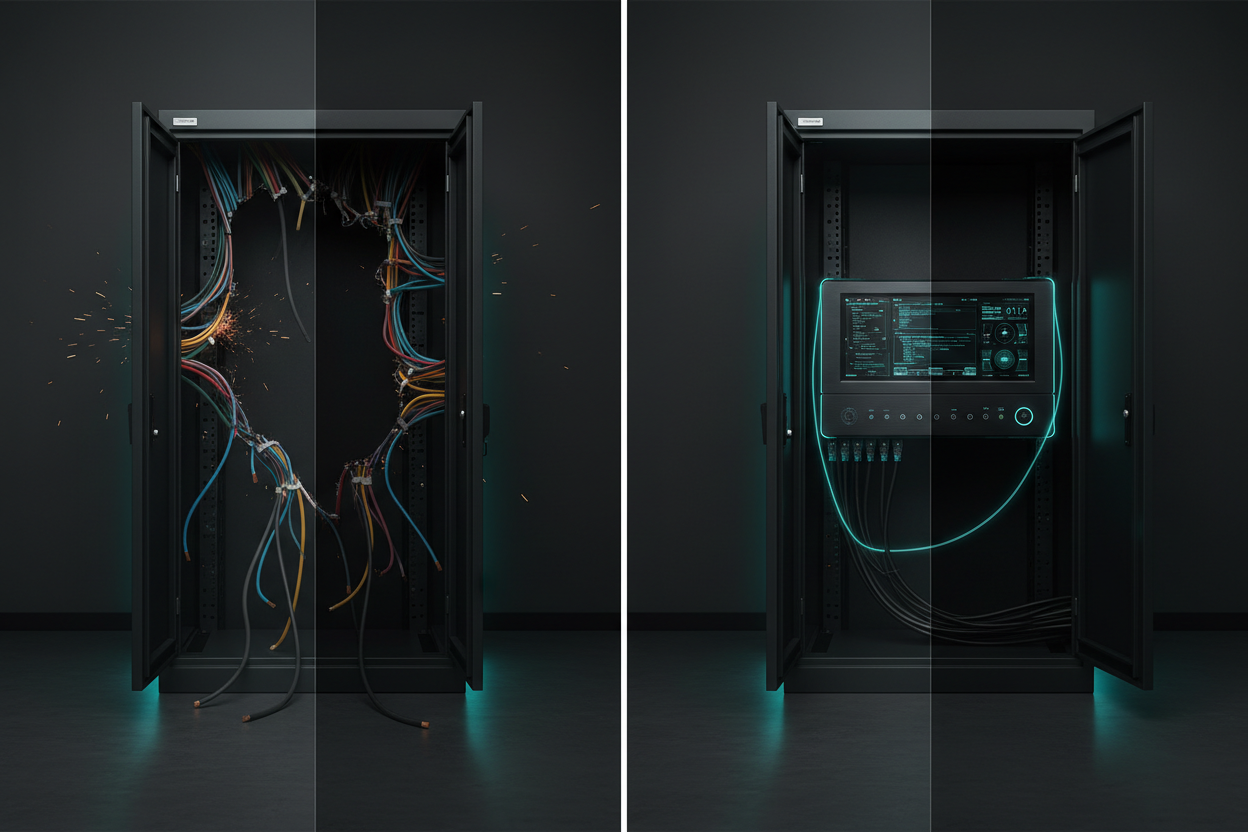
It means adding a thin layer on top of your existing systems that carries the customer across the handoffs, while every system underneath keeps doing exactly what it does today.
Your CRM stays your CRM. Your DMS stays your DMS. Your service software stays where it is. The orchestration layer does not replace any of them. It sits above them and does the one thing none of them was built to do: keep the customer's thread whole as they move from one tool to the next. Website intent gets carried into the CRM instead of dropped. The service record surfaces to sales when the customer is in an equity position. The after-hours lead gets a real first response instead of a timestamp. Nothing gets gutted. The seams get closed.
The reason this works is that your systems almost always can share data already. They have exports, APIs, or feeds. What they lack is something that uses those pipes to move the customer at the right moment. Consolidating your store's records is a known, solvable job. Cox Automotive's own data shows how common the underlying data conflict is, which is exactly the gap an orchestration layer is built to close.
Orchestration is additive, not destructive. You keep every system that works and add a connective layer only where the handoffs break. That is the difference between fixing a seam and gutting a store.

Won't an all-in-one platform just fix this by consolidating everything?
It moves the seams, it does not delete them. Consolidating onto one platform can remove a few handoffs, but no single platform runs every function a dealership needs, so you always hand off to something outside it.
Even the most complete platform still passes the customer to your DMS, your OEM systems, your service software, your lender tools, and a stack of third parties. So "one platform to rule them all" trades a set of gaps you already understand for a new set inside a single vendor, plus a full migration to get there. You also hand one company control of every record in your store, which is a different kind of risk. For most dealers, the honest math favors orchestrating the current stack: it is faster to stand up, it costs less, and if it does not work you can back it out without having bet the whole store on one migration.
The tell
If a vendor's answer to "why don't my systems talk" is "replace this system with ours," ask them what happens at the handoff to the systems you are keeping. If they do not have a clean answer, they are selling you a box, not a fix.
When is replacing a system actually the right call?
When a system genuinely cannot do its own job, or cannot share data at all. That is a real situation, it is just far rarer than the pitch suggests, and even then you replace the one failing system, not the whole stack.
Replace a core tool when it has no usable export or API and the vendor will not open one, when the vendor is discontinuing or no longer supporting it, or when it simply fails at the basic task it was bought for. Those are legitimate reasons to swap that one system. What is not a legitimate reason, on its own, is "it doesn't integrate well." Poor integration is a seam problem, and a brand new system arrives with the same seams to the tools around it. If you replace a working CRM to fix integration, you will spend six months migrating and retraining, then discover the handoff to your DMS and your service drive is exactly as broken as it was before, because you fixed the box and never touched the pass.
The move
Diagnose before you demo. Map where your systems actually stop talking, decide whether the fix is a seam or a genuinely failing system, and only then let anyone sell you a replacement. Orientation before execution, every time.
The point is to keep what works and connect it
Your CRM and DMS are usually not the problem. The unguarded space between them is. Replacing a working system to fix a handoff is expensive, disruptive, and it does not even fix the handoff, because the new system inherits the same seams the day it goes live. The cheaper, faster, reversible move is to orchestrate on top of what you already own and close the gaps where the conversation is actually getting dropped. That is how we approach integration: connect the tools you have before you replace any of them.
So before the next vendor tells you the fix is a new CRM or a new DMS, get a clear read on whether your problem is a system or a seam. That is exactly what we do on a 30-minute diagnostic call: map where your systems stop talking, and show you what needs connecting versus what, if anything, actually needs replacing, before you spend a dollar. Worth a look before you sign?
Frequently asked questions
Do I have to replace my CRM or DMS to fix the integration problem?
Almost never. The integration problem is a broken handoff between systems, not a broken system. Your CRM and DMS usually do their own jobs fine. What is missing is a layer that carries the customer across the gaps between them, and that layer sits on top of the tools you already own. See the orchestration problem for the full picture.
When is replacing a dealership system actually the right call?
Only when a core system genuinely cannot do its own job or cannot exchange data at all: no usable export or API, the vendor is discontinuing it, or it fails at the basic task it was bought for. Even then, replace the one failing system, not the whole stack. Poor integration alone is not a reason to replace a system that otherwise works.
Will buying an all-in-one platform solve the integration problem?
It moves the problem, it does not remove it. No single platform runs every function a dealership needs, so you still hand off to your DMS, OEM tools, service software, and third parties. You trade a known set of gaps for a new set inside one vendor, plus a large migration. For most stores, orchestrating the current stack is faster, cheaper, and reversible.
What does it actually cost to orchestrate instead of replace?
Less risk and less disruption. Orchestrating on top of existing systems means no data migration, no retraining the floor, and no downtime. You keep what works and add a connective layer only where the handoffs break, and if it does not help you remove it without having gutted your core tools. Knowing which past customer is back in-market is one of the seams that layer closes.
Sources
- DealerSignals, "2026 State of Dealer Technology." dealersignals.com
- Cox Automotive, "Power of Data Study" (2024). mediaroom.kbb.com
> FAQ
Do I have to replace my CRM or DMS to fix the integration problem?
Almost never. The integration problem is a broken handoff between systems, not a broken system. Your CRM and DMS usually do their own jobs fine. What is missing is a layer that carries the customer across the gaps between them. That layer sits on top of the tools you already own, so you fix the seams without ripping anything out.
When is replacing a dealership system actually the right call?
Only when a core system genuinely cannot do its own job or cannot exchange data at all: it has no usable export or API, the vendor is discontinuing it, or it fails at the basic task it was bought for. Even then, replace the one failing system, not the whole stack. Poor integration is not a reason to replace a system that otherwise works, because a new system inherits the same seams.
Will buying an all-in-one platform solve the integration problem?
It moves the problem, it does not remove it. Consolidating onto one platform can reduce some seams, but no single platform runs every function a dealership needs, so you still hand off to the DMS, to your OEM tools, to your service software, and to third parties. You trade a set of known gaps for a new set inside one vendor, plus a large migration. For most stores, orchestrating the current stack is faster, cheaper, and reversible.
What does it actually cost to orchestrate instead of replace?
Less risk and less disruption, which is the point. Orchestrating on top of existing systems means no data migration, no retraining the floor on new software, and no downtime while a core system is swapped. You keep what works and add a connective layer only where the handoffs break. If it does not help, you remove the layer without having gutted your store's core tools.
Michael Rodriguez
20 years in automotive retail, currently selling cars at the #1 volume Chevrolet dealer in the world. Michael builds and operates AI workflows on a real dealership floor, then translates what holds up for other operators. Used to diagnose systems, not sell software.
Want a clear-eyed read on where AI actually helps your store? Start with the twelve-question Reality Check, or talk to an operator.