
July 11, 2026 · Michael Rodriguez
The Difference Between a Dashboard and an Intelligence Layer
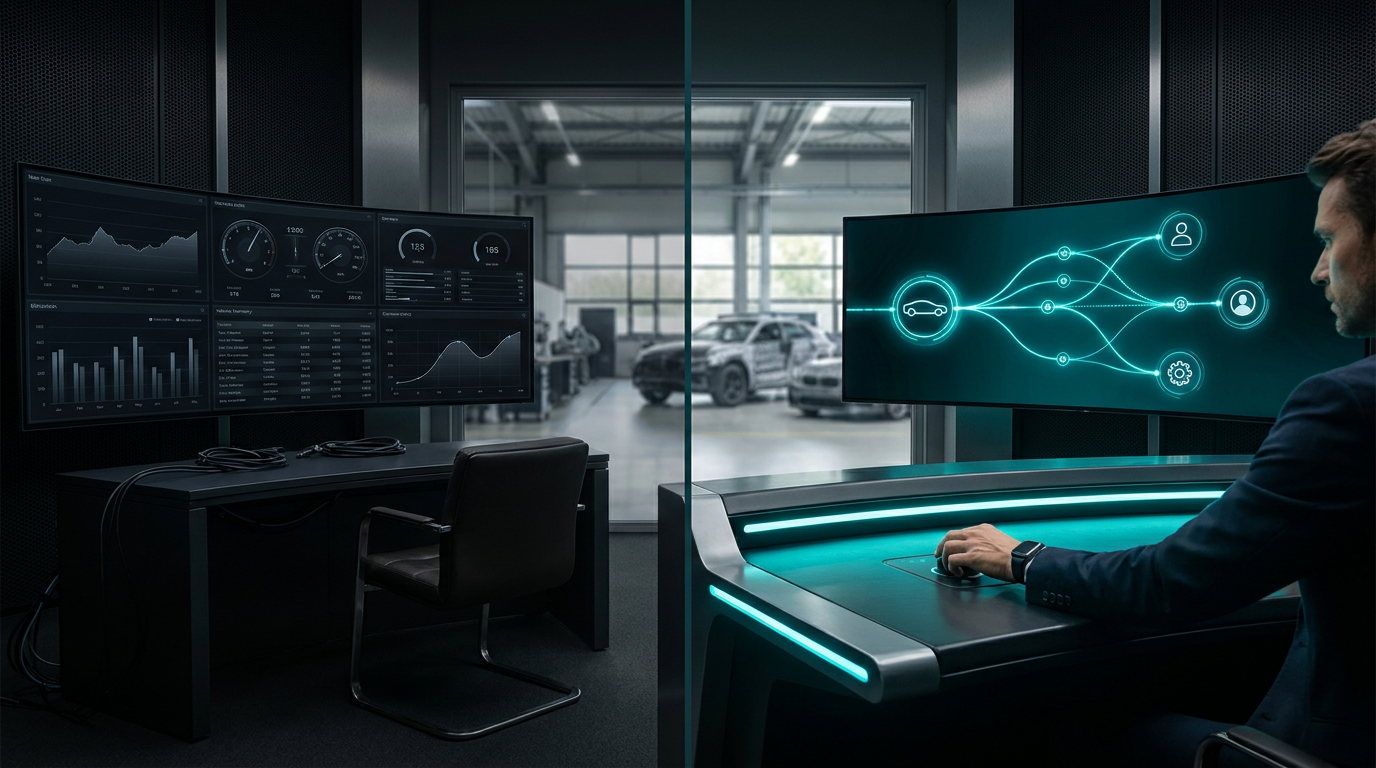
A dashboard shows you what already happened; an intelligence layer acts on what is happening now. A dashboard is a screen you have to remember to check, sitting on top of one system. An intelligence layer sits across all your systems, watches the customer as they move, and does something at the moment it matters instead of reporting it to you later.
Every AI pitch a dealer hears eventually shows the same thing: a beautiful screen full of charts. Response times, lead sources, funnel stages, all rendered in clean color. It looks like intelligence. Most of the time it is a dashboard wearing the word "intelligence" as a costume. I sell cars for a living, so let me draw the line between the two, because the difference is the difference between knowing you lost a deal and never losing it.
The short answer
A dashboard reports the past; an intelligence layer acts in the present. A dashboard is a screen that shows you numbers after the fact and depends on a person remembering to check it and having time to react. An intelligence layer sits across all of your systems, watches the customer as they actually move through them, and takes or triggers an action at the exact moment it matters. One tells you what already happened on one system. The other does something about what is happening now, across all of them.
Definition
Intelligence layer:
A connective layer that sits on top of a dealership's existing systems (CRM, DMS, website, service tools) and, instead of just displaying data, watches the customer moving across those systems and acts in real time, routing, alerting, responding, or surfacing the right customer to the right person at the right moment. A dashboard, by contrast, sits on top of one system and reports what already happened, waiting to be read.
What is the actual difference between a dashboard and an intelligence layer?
A dashboard shows; an intelligence layer does. That is the whole thing in four words, and everything else is a consequence of it.
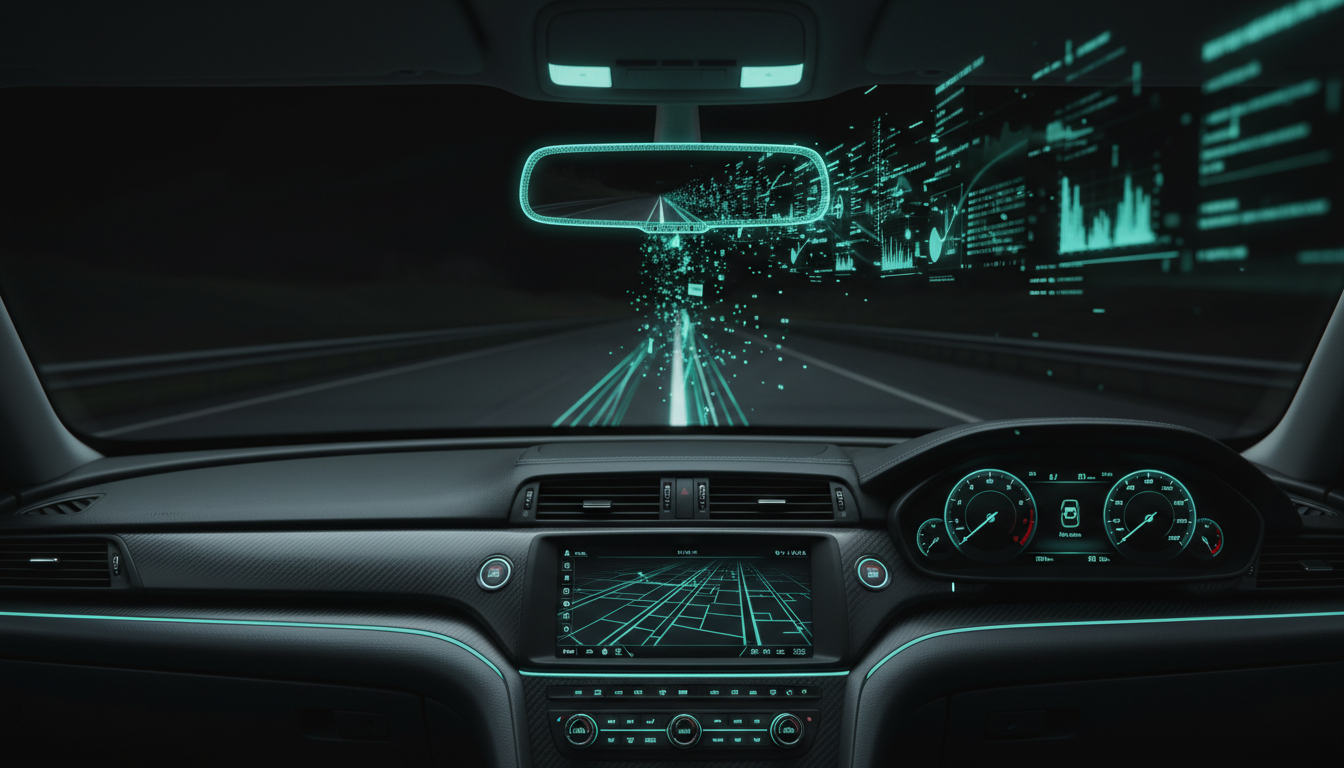
A dashboard is a report you have to go read. It pulls numbers out of a system, arranges them nicely, and waits. Its entire value depends on a person opening it, understanding it, and having the time and authority to act on what it says. It is a rear-view mirror: accurate, useful for seeing where you have been, and completely incapable of steering the car. An intelligence layer is the opposite posture. It does not wait to be read. It watches the customer's actual movement across your systems and, at the moment something matters, it acts, or it hands the moment to a person who can. The dashboard's unit is a number on a screen. The intelligence layer's unit is a customer in motion.
A dashboard tells you a deal died. An intelligence layer keeps it alive.
Why isn't a good dashboard enough?
Because a dashboard only pays off if someone is watching it at the exact minute the number changes, and no dealership has that person. A store runs on a busy Saturday, not on a quiet analyst staring at a screen.
Think about how a dashboard actually gets used on a real floor. It gets opened in a Monday meeting. Someone notices response time crept up last week. There is a conversation about it. Maybe a process changes. All of that is fine, and trend review has real value. But notice what already happened: the deals that the slow response cost you last week are gone. The dashboard reported the leak after the water was already on the floor. The information was accurate and it was late, which in a dealership is the same as useless for that customer. The problem is not that the dashboard is wrong. The problem is that its whole model, show a human a number and hope they act, breaks in exactly the moments that decide deals, because those moments happen when nobody is looking at the screen.
And the moments that matter most are precisely the ones a screen cannot catch. The lead that comes in at 8:40 PM. The service customer sitting in your lounge in a strong equity position right now. The past buyer who just started shopping again this afternoon. None of those wait for your Monday meeting. This is the same failure I described in where dealership conversations get dropped between systems: the deal dies in the gap, in real time, and a dashboard can only tell you about it afterward.
The tell
If the value of a tool depends on a human noticing a chart, you are looking at a dashboard, no matter what the vendor calls it. Ask what it does when nobody is watching the screen. If the honest answer is "nothing, it waits," that is your answer.
Does speed actually matter enough to justify acting in real time?
Yes, and it is not close. The window that decides an internet deal is measured in minutes, which is exactly the window a dashboard cannot operate inside.
This is not an AvI claim, it is well-documented industry data. The MIT and InsideSales.com Lead Response Management study found the odds of qualifying a lead were dramatically higher when a store responded inside five minutes instead of thirty.
Source: MIT and InsideSales.com Lead Response Management Study
Now put that number next to a dashboard. A dashboard can tell you, next week, that your average response time was two hours. It cannot compress two hours into five minutes. Only something that acts in the moment can do that, by responding, routing, or alerting the instant the lead lands. The speed gap is the entire argument for an intelligence layer over a screen, because the deal is won or lost inside a window the report never gets to touch.
A dashboard measures the response window. An intelligence layer acts inside it. When the odds of qualifying a lead shift 21x based on minutes, the tool that can only report those minutes after the fact is measuring the loss, not preventing it.
Why do so many "AI" tools turn out to be dashboards?
Because a dashboard is far easier to build and demos beautifully. A screen full of charts photographs well on slide three. Acting correctly across a dealer's messy, disconnected systems is genuinely hard, so a lot of vendors quietly ship the easy thing and call it the hard thing.
There is nothing wrong with a dashboard being a dashboard. The problem is the label. When "AI-powered intelligence" turns out to be a reporting screen, the dealer buys a rear-view mirror expecting a co-pilot, and then wonders why nothing on the floor actually changed. The store still misses the 8:40 PM lead. The service-to-sales handoff still does not happen. The dashboard faithfully reports all of it, on a lag, to a person who was already going to notice the trend anyway. The reason this is so common is the same reason the hidden integration tax is so common: connecting systems and acting across them is the expensive, unglamorous work, and displaying a number is not.
The tell is data conflict. To act correctly across systems, a layer first has to reconcile a single customer who lives as three disagreeing records in three tools. Most dealers already feel this problem.
That second half of the stat is the quiet giveaway. When 70% of dealers say lags in real-time data make their insights less useful, they are describing the dashboard's core weakness in their own words. Late information is weak information. An intelligence layer's entire job is to remove the lag by acting when the data is still live.
How does an intelligence layer actually work in a store?
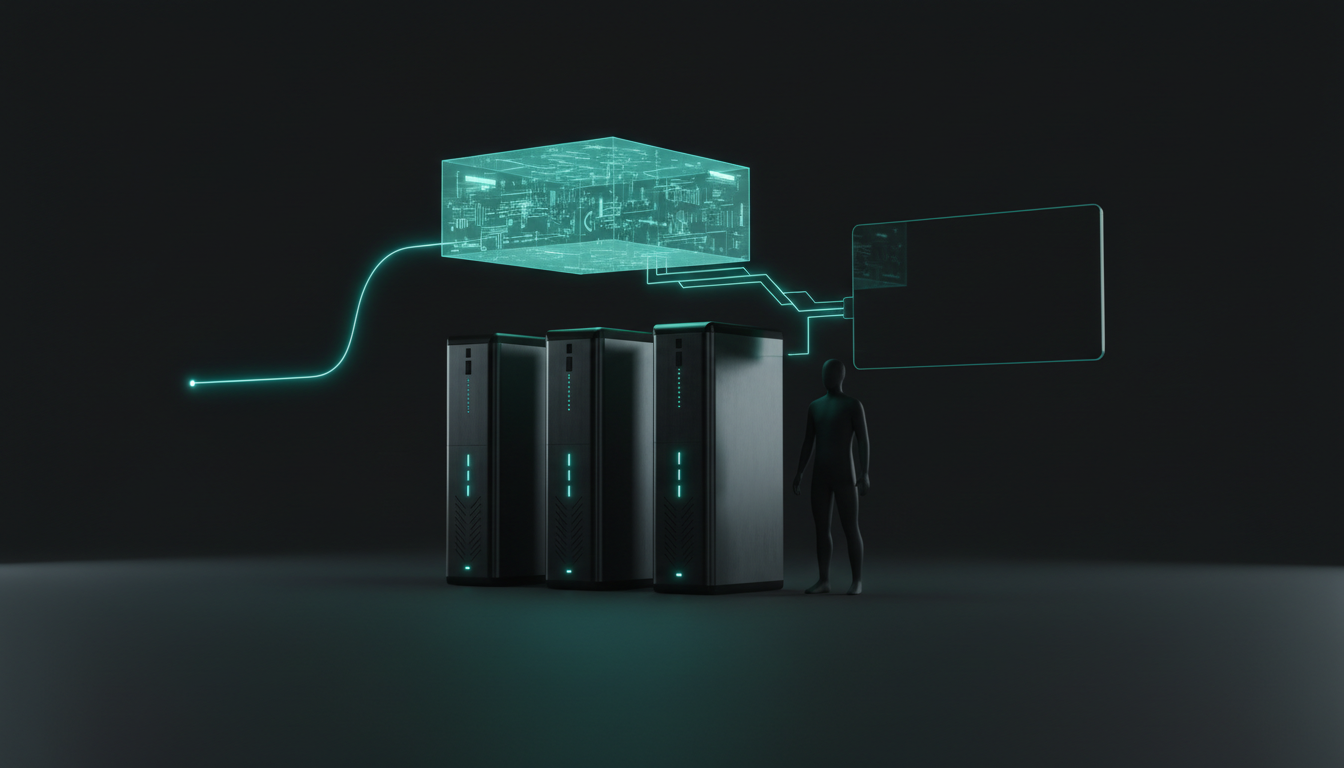
It sits on top of the systems you already run, keeps one customer's thread whole as they move across them, and acts at each handoff instead of reporting on it. Same customer, one thread, real time.
Walk it through the store. The website knows a shopper spent twenty minutes on a specific truck. Instead of that intent dying at the form and a dashboard later noting "web leads up 4%," an intelligence layer carries the intent into the CRM and triggers a fast, informed first response. The service system knows a customer in the lounge is in a strong equity position. Instead of a report showing "service traffic steady," the layer surfaces that customer to a salesperson while the car is still on the lift. The past buyer starts shopping again, and instead of finding out when they appear on a competitor's lot, the signal reaches a person who can act today. This is the orchestration problem solved as a working layer: the connective tissue that finishes the conversation, not the screen that grades it.
And critically, it does not require you to throw out your dashboards or your CRM. Your dashboards still do the thing they are good at, showing you the trend over a week. The intelligence layer adds the thing they structurally cannot do: acting in the moment, across systems, on a single live customer. You do not replace your CRM or DMS to get it. You add a connective layer on top of what you own.
The move
Before you buy anything branded "intelligence," ask the one diagnostic question: what does it do when nobody is watching it? A dashboard waits. An intelligence layer acts. Orientation before execution, every time.
The point: stop buying mirrors and calling them co-pilots
A dashboard is a rear-view mirror. It is honest, useful, and completely incapable of catching the deal that dies at 8:40 PM or the equity customer sitting in your lounge right now, because both of those happen while the screen goes unwatched. An intelligence layer is a different kind of tool entirely: it sits across your systems, watches the live customer, and acts in the window that actually decides the deal. Most of what gets sold as intelligence is a mirror with a new sticker. The difference is not cosmetic. It is the difference between reporting your losses and preventing them.
So before the next vendor shows you a screen full of charts and calls it intelligence, ask what it does in the moment, not what it shows you next week. That is exactly what we do on a 30-minute diagnostic call: map where your store needs to act in real time versus where a report is fine, and show you which is which before you spend a dollar. And it is how we approach the work: connect and act on the tools you already own, rather than sell you one more screen. Worth a look before you buy?
Frequently asked questions
What is the difference between a dashboard and an intelligence layer?
A dashboard reports the past; an intelligence layer acts in the present. A dashboard is a screen that shows you numbers after the fact and depends on someone remembering to check it and having time to react. An intelligence layer sits across all your systems, watches the customer as they move, and acts at the moment it matters. See the orchestration problem for how that layer is built.
Isn't a good dashboard enough for a dealership?
Only if you have someone watching it every minute and free to act instantly, which no store does. A dashboard is a rear-view mirror, useful for spotting trends and reviewing a week, but it cannot catch the 8:40 PM lead or the equity customer in the service lane in the moment, because by the time the number is on the screen, the window to act has usually closed.
Does an intelligence layer replace my CRM or my dashboards?
No. It sits on top of the tools you already own, including your CRM, DMS, and reporting dashboards, and connects them. Your dashboards keep showing you the trend. The intelligence layer adds what they cannot do: carrying the customer across the gaps and acting in real time, without ripping anything out. See why you do not have to replace your CRM or DMS.
How do I tell if a vendor is selling me a dashboard or an intelligence layer?
Ask what it does when nobody is looking at it. A dashboard's honest answer is nothing, it waits to be read. An intelligence layer does something on its own: it routes, alerts, responds, or surfaces the right customer to the right person at the right moment. If the whole value depends on a human noticing a chart, you are buying a dashboard, however it is branded.
Sources
- J. Oldroyd et al., MIT and InsideSales.com "Lead Response Management Study." onecavo.com
- Cox Automotive, "Power of Data Study" (2024). mediaroom.kbb.com
> FAQ
What is the difference between a dashboard and an intelligence layer?
A dashboard reports the past; an intelligence layer acts in the present. A dashboard is a screen that shows you numbers after the fact and depends on someone remembering to check it. An intelligence layer sits across all your systems, watches the customer as they actually move through them, and takes or triggers an action at the moment it matters, instead of waiting for you to read a report and react.
Isn't a good dashboard enough for a dealership?
Only if you have someone watching it every minute and free to act instantly, which no store does. A dashboard is a rear-view mirror. It is genuinely useful for spotting trends and reviewing a week, but it cannot catch the 8:40 PM lead or the equity customer in the service lane in the moment, because by the time the number shows up on the screen, the window to act on it has usually already closed.
Does an intelligence layer replace my CRM or my dashboards?
No. An intelligence layer sits on top of the tools you already own, including your CRM, DMS, and reporting dashboards, and connects them. Your dashboards keep doing what they do well, showing you the trend. The intelligence layer adds the thing they cannot do on their own: carrying the customer across the gaps between systems and acting in real time, without ripping anything out.
How do I tell if a vendor is selling me a dashboard or an intelligence layer?
Ask what it does when nobody is looking at it. A dashboard's honest answer is nothing, it waits to be read. An intelligence layer does something on its own: it routes, alerts, responds, or surfaces the right customer to the right person at the right moment. If the whole value depends on a human noticing a chart, you are buying a dashboard, however it is branded.
Michael Rodriguez
20 years in automotive retail, currently selling cars at the #1 volume Chevrolet dealer in the world. Michael builds and operates AI workflows on a real dealership floor, then translates what holds up for other operators. Used to diagnose systems, not sell software.
Want a clear-eyed read on where AI actually helps your store? Start with the twelve-question Reality Check, or talk to an operator.